

Josh Feye: Hi, Ryan. How are you?
Ryan Czerwonko: I'm doing better than I've been in a really long time.
JF: Yeah? Oh my gosh, why do you say that?
RC: Well, we went on two retreats in a row, to Hudson and to the Hamptons, darling, so I just feel like a different person.
JF: I love it. How so?
RC: The feeling started in Hudson, but it really settled in in the Hamptons. I don’t know, I just feel a sudden sense of peace about certain things, and a lot of things with my physical body and my mental state are integrating. Things are feeling sort of synchronous. Plus, I was just in the sun, eating, going to the beach, swimming in a saltwater pool, drinking wine, and having a wonderful time with my friends and collaborators.
JF: That sounds heavenly.
RC: It was.
JF: That actually makes me so happy, because knowing the trials and tribulations of your production of Sea Gull, it is great to hear.
RC: Well, it’s also interesting because now we have a rough cut of Chekhovian, the documentary about the making of our production of Sea Gull. They’re trying to get it down to an hour and a half, but we all watched it in the Hamptons. It’s amazing, but it was fraught. This process on The Cherry Orchard hasn’t been without its challenges. It’s an indie theater, nothing’s easy, but every problem that has occurred has been an artistic answer we were waiting for, not the volatile, surprising problems we had with Sea Gull. Everything unexpected in this process has felt like, “Oh yeah, of course that needed to happen.” Like, someone in the cast just dropped out the other day, so I decided to make the character a ghost.
JF: That’s Interesting. I was going to ask, do you feel like the people you’re collaborating with now are in sync with you more?
RC: Yes. What happened before had its own kind of syncopation. Sea Gull is about theatre people and all the problems, joys, and challenges they face, things that were also happening to us in real life. Plus, we were making a documentary about those things, so whatever happened, we’d think, “Well, it will be good for the documentary.” That created a fragmented artistic product, which in a way was perfect for that play, because Sea Gull is about that kind of chaos. Everything we struggled with reflected the story. This is different. It’s calmer.
JF: So what are you doing differently in the process from Sea Gull to your latest production of The Cherry Orchard?
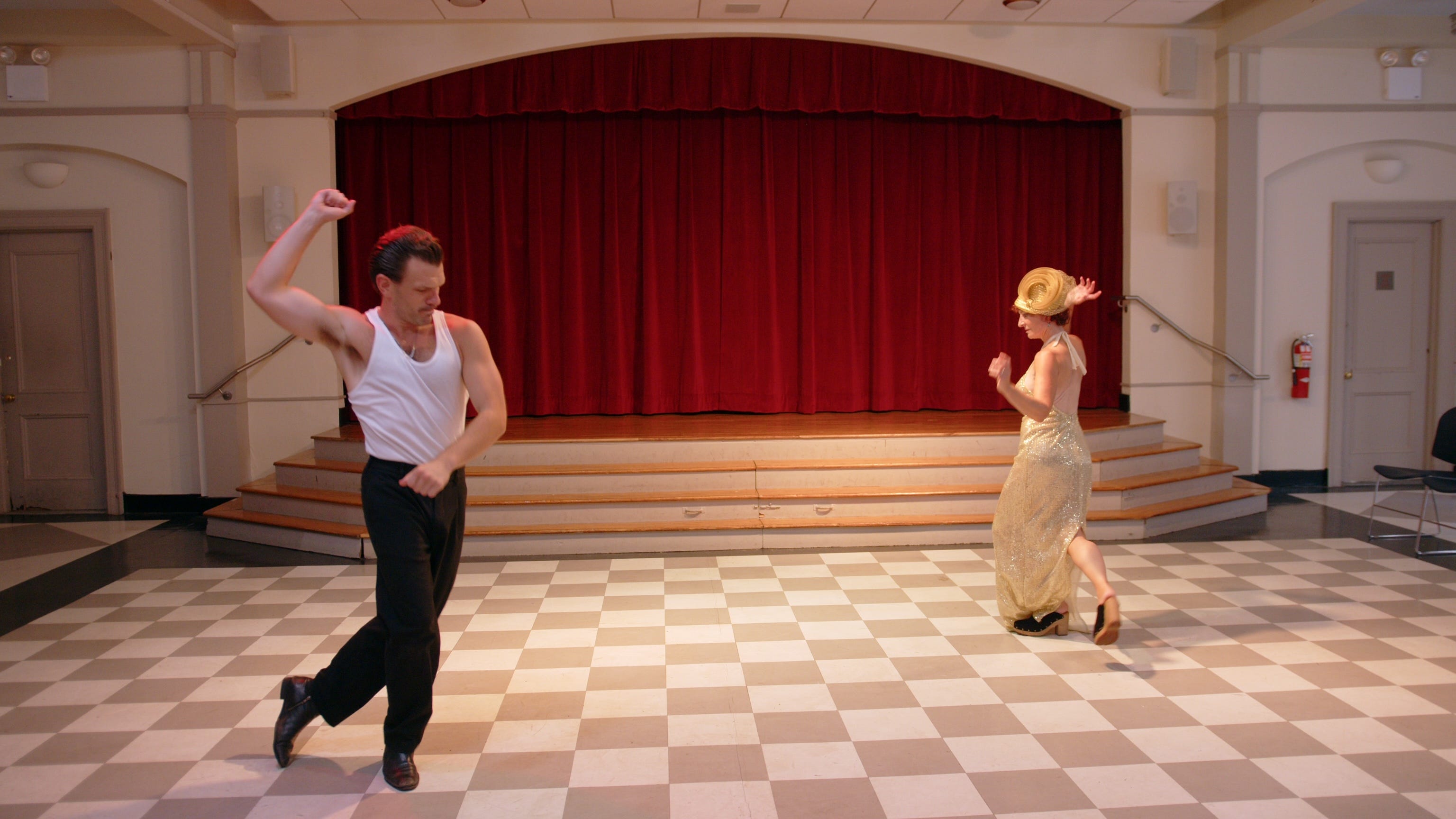
RC: There have only been two cast changes throughout the whole process, which is great. In Sea Gull, only four people remained from the original cast, and we recast six other parts with about 14 different actors total. At one point, we had three Trigorins in one week. With The Cherry Orchard, the cast has been stable, and it’s made up entirely of people who were either in the final Sea Gull or who are students at Adult Film. Back when we did Sea Gull, the company was just starting. We didn’t know as many people and didn’t have as deep a bench. Now, even if someone dropped out, I could name ten others who’d love to do the part. That’s created a relaxation that wasn’t there before. We’re also working with a much larger budget, and we know the parameters of this crazy space we’re in. My specific artistic process hasn’t changed, but the scale has. Certain elements we played with in Sea Gull—video projections, dance, anachronistic music—we realized we’d have to quadruple for The Cherry Orchard. I didn’t want to rely on melodrama like in Sea Gull. The Cherry Orchard is much more anti-climactic. Megan Metrikin, who plays Ranevskaya and who played Arkadina in our Sea Gull, is a lifelong Fellini obsessive, as am I. There’s also this Russian director, Nikita Mikhalkov, whose films blend Russian and Italian sensibilities. That’s what I wanted for this, very maximalist, surreal, dreamlike, with ideas exploding against the simplicity of a set that’s just six chairs. I believe The Cherry Orchard is a comedy, and that Chekhov should be fast. I’m not interested in the tired “crumbling aristocracy” line; I’m interested in love and sex. Lubov means love, and I think she’s a woman hurling herself after love, destroying everything in her path, including the orchard, doing it for love.
JF: This is the second year-long Chekhov production with Adult Film. Is this becoming a larger narrative for the story of the company?
RC: Yes. I’d like to do all of the major Chekhovs. My sensibility, love, fun, sex, music, dance, physical acting, and works for Chekhov, and I think it could work for Tennessee Williams and others. But with Chekhov, it feels like the foundation of what acting should be.
JF: I interviewed you early in the process of Sea Gull, and we talked about the broader culture at that time. The pandemic had changed people, and there was a sense that the general public was curious about the inner world. Where does The Cherry Orchard fit in all of that?
RC: When I started this, I was inspired by Nikos Psacharopoulos at Williamstown, who did multiple Chekhov plays with the same actors over many years. I wanted to see if anyone could do this for a year in our fragmented modern world. The answer is yes, even if it doesn’t look like I thought it would. In the time since deciding to do Sea Gull, there have been countless Chekhov productions. Since starting The Cherry Orchard, there’s even been one at St. Ann’s Warehouse. I didn’t see it; I didn’t want it to influence me. We move slowly because we want to, and because we have no money. At one point, I doubted whether it was worth it, with so many other productions overshadowing ours. But then I realized that the madness of our rehearsals, retreats, and performances is priceless. I think Chekhov elicits a kind of madness no other playwright can, and that matters more than anything outside. This project reinforces why I’m doing it. If we do all the plays over many years, it doesn’t matter what else is happening; we’re in it for the long run.
JF: It’s a commitment to something bigger than yourself.
RC: Yes. For me, Chekhov is like my Bible, deeply connected to love, spirituality, and sex. It’s not about success. We sold out Sea Gull, and I’m not worried about selling this out. Our audience is hungry for our take on it. Our madness is catching on, and sharing that with the audience is what matters.
JF: Do you think Adult Film is becoming a theatrical institution in the city?
RC: I can’t tell how people see us, but I know we’ve developed one of the most interesting acting student communities in New York. We’ve done plays in many styles and spaces, Cowboy Mouth in a tiny room, The Cherry Orchard as a 12-person extravaganza, Cemetery Soup at The Brick, which was abstract and experimental, and Lucy Thurber’s Where We’re Born realism. We’re growing quickly. I don’t know if that makes us an institution. What do you think?
JF: I think people have expectations now. When I think of good acting in an intimate space, I think of Adult Film.
RC: Good acting plus the flavor of the material, yes.
JF: Will that change how you operate or talk about the group? At first, Adult Film felt antagonistic, like, “If you’re not going to cast us, we’ll do it ourselves.” Now people know you, so it feels different.
RC: I still think the act of creating any of this is inherently antagonistic, even if I never meant to underline that. We all want to create constantly, and we live in an unfair ecosystem we can’t control, except in how we treat each other and follow through. The energy has shifted, maybe smoothed out. The people this has brought together now have deep friendships, trust, and familiarity. That was lacking before. There’s more possibility and creativity now, and maybe some angst has been replaced by love. We have a sense of self and strength independent of institutions. We’ve still been mostly ignored by the press, so there’s more proving to do. It’s hard to grow without star names or big money, a catch-22. But I don’t focus on that. I just want to do better work and keep the group about people helping each other. The work comes out of that.
JF: It’s a sign of how much the company has grown. And it’s interesting to reflect on making theatre now that there is some distance from Covid.
RC: I feel like that lasted until 2024.
JF: Really? I’d say early 2023.
RC: Maybe. I guess I’m talking about the last dregs of it. Well, I mean, I still feel like it was very… like the process we were doing in Sea Gull was so… man, I don't even know how we… it just felt so moored and so fragile and so disparate. And now it feels like there’s a much stronger platform and container for it. But it was a strange, strange time.
JF: Yeah, it was very strange. But we made it out. I feel like I see the light now.
RC: I do too. Oh my God, I remember feeling so… even when I was starting the group, that’s when, kind of bringing it full circle, I feel better now than I have in a very long time. Even though something was spurring me and other people on to get the energy to start creating this stuff, it was a very dark time. Very confusing, extremely restrictive, and polarized. That’s why it felt antagonistic, because at that time, the social media madness, the groupthink… it felt like you were going to get your head cut off if you did anything counter to what the mob was saying. Even something as inoffensive as doing a play.
JF: Right, and yeah, there was just so much tension in the air.
RC: And I don’t feel that anymore. I also feel like online has lost its power in a lot of ways. Not entirely, but that peak madness of 2021–2022, I just feel like people are back to caring about their own lives a bit more, instead of each new group crisis.
JF: That definitely feels like what this summer has been. There’s not even a song of the summer.
RC: Yeah, Charli XCX was the end of all of it.
JF: Exactly!
RC: I feel like everyone’s a bit more relaxed now, and maybe people are doing things out of enjoyment and pleasure in a more holistic way, which I definitely am. I know it’s really stupid, but I read that “Let Them” book.
JF: I’m not familiar.
RC: Oh my God, it’s this ridiculous self-help book. Basically she just writes the words “let them” about 400 times. Like, 50% of the book is the words “let them.”
JF: I love a good self-help book.
RC: Me too. I’m not judging it. But, you know—you can’t control what other people do. You can’t control your career. You can’t control what people do online, or who writes what. It’s really just about the integrity you have with the people literally in your life. I feel a much stronger sense of that now.
JF: I love that, Ryan. Can I ask you some fun questions?
RC: Sure!
JF: Is there a theatre artist, living or dead, you’d love to take out to dinner or have a night on the town with?
RC: I mean, Nikos Psacharopoulos. Yeah, or wait, maybe my second choice…
JF: I figured you would say Elaine Stritch.
RC: Oh yeah! Who’s some terrible slut or something? I don’t know. Elaine Stritch is a good one.
JF: I feel like you and Stella Adler would also have a good time. Do you have a favorite film about the theater?
RC: Opening Night.
JF: Yeah.
RC: I know that’s the boilerplate answer for everybody, but… I haven’t watched Children of Paradise in a long time, and I rewatched it recently. It was amazing.
JF: Aw, yeah, it’s so good!
RC: Another really good one is Bergman’s After the Rehearsal.
JF: I’ve never heard of that one. Is it on Criterion?
RC: I think so, yeah.
JF: What’s your favorite Madonna album?
RC: My favorite Madonna album? Probably Like a Prayer is her best… no, no, no—my favorite is Erotica.
JF: Oh, good choice. Yeah, that whole period—Erotica, Bedtime Stories, and Ray of Light is absolutely perfect.
RC: Like a Prayer is probably her masterpiece, but… I like all of them for different reasons. Before Hard Candy, of course.
JF: I was literally just listening to “Give It 2 Me” earlier.
RC: That’s Megan’s song. I mean, Megan’s a lifelong Madonna obsessive. We always said it’s Madonna’s The Cherry Orchard.
JF: Ahhh! I can’t wait. Okay, and for my last one—what are your dreams for the future of the American theatre?
RC: Well… what was that book from Robert Edmond Jones?
JF: Oh, his book of lectures, Towards A New Theatre!
RC: Right, and that quote you sent me where he says something like film is the future of theatre.
JF: Yes, using projections to express the inner world.
RC: Right. I just did this play, Our Class, with the Arlekin Players and Igor Golyak in Boston, and he does similar things with projections, kind of ripping the play apart to tell it in a more abstract way, but still leaving room for grounded, expansive performances. That was really inspiring to see someone farther along working in many of the same ways we do. So I guess just continuing to lean into that. I want actors, people who do both theatre and film… The future of American theatre is blue-collar actors with interesting faces. A mix of different kinds of people—really, for real. And I think the future of American theatre is a focus on the person, the artist, the performer, the actor.
Adult Film’s production of THE CHERRY ORCHARD runs September 18th- October 12th at Rutgers Presbyterian Church.
Follow Adult Film on Instagram.
Follow Ryan on Instagram.